Hidden Water Damage: Why Many Minnesota Homes Have Rot Behind Their Siding
September 12, 2026
Quick Answer: Rot behind siding in Minnesota homes almost never starts with the siding itself. It starts with the layers underneath it: a drainage plane that's torn or missing, flashing around a window or roofline that was never lapped correctly, or grading and gutters that push water back against the wall instead of away from it. Modern claddings like vinyl and fiber cement can hide that damage for years, because they don't stain or peel the way old wood siding did when water got behind it. By the time a homeowner notices soft trim or a musty smell inside, the sheathing and framing behind the wall have usually been wet for a long time. Fixing the siding without fixing the water path underneath it just buys the rot a few more years to work.
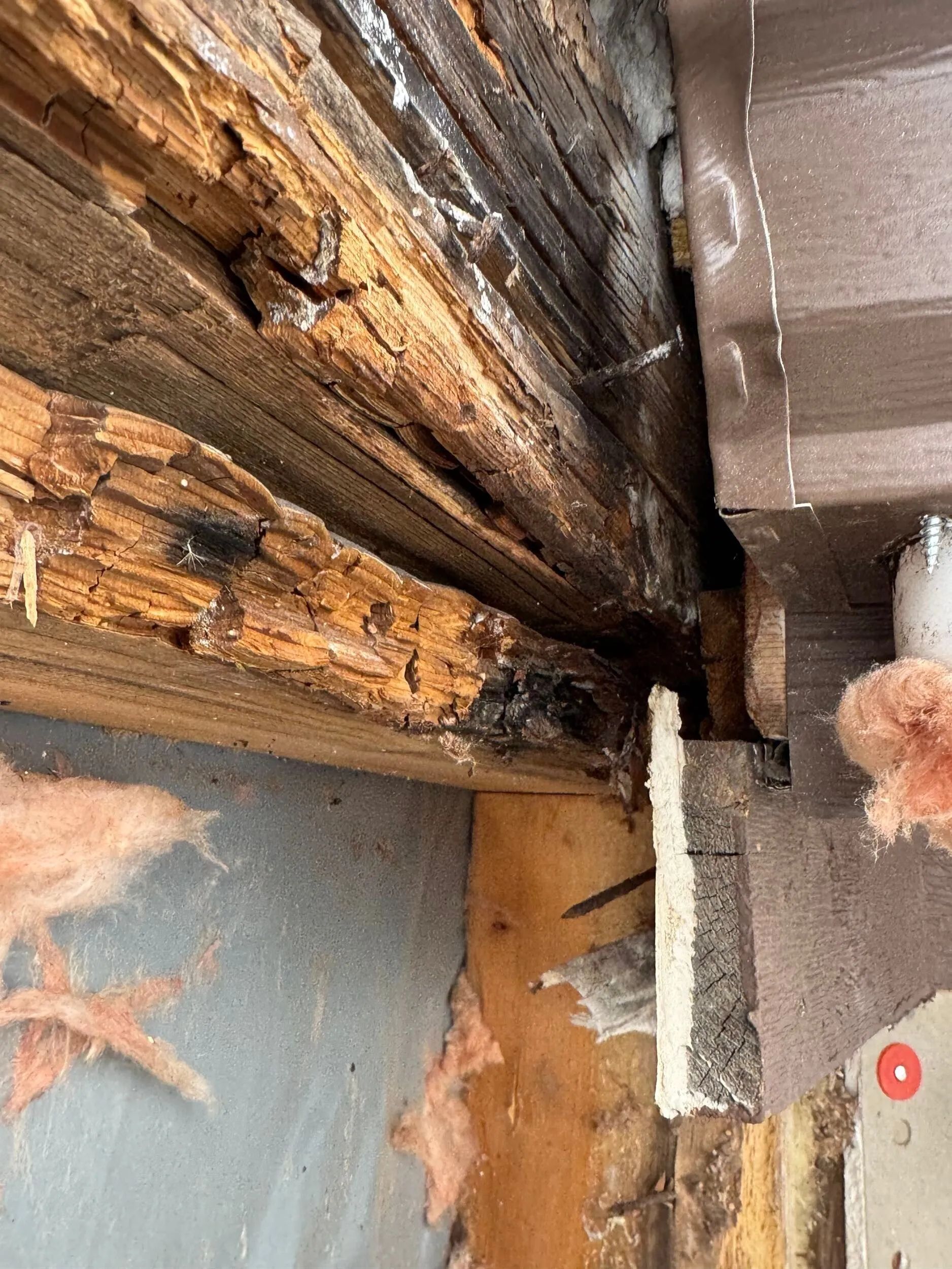
A crew pulling siding off a 1990s two-story in the Twin Cities expects to find some worn sheathing near the ground, maybe a soft spot under a leaky gutter. What they don't expect is what shows up around the second-floor windows: black-streaked plywood, studs gone soft enough to push a screwdriver into, and insulation that's been wet so long it's compressed into a damp gray mat. The siding on that wall looked fine from the driveway. It had for years. Nobody knew, because nothing about the outside of a house, yours included, ever gives that away.
This is the part of a remodel that surprises homeowners more than almost anything else. Your siding isn't the seal that keeps your house dry. It's the outer layer of a system, and when one piece of that system fails quietly, water can move through a wall for years before you see or smell a single sign of it. Minnesota's freeze-thaw winters, heavy spring runoff, and humid summers make that slow failure especially common here, and especially damaging once it starts.
Siding Is a Screen, Not a Seal
Every type of siding lets some water through. Lap siding has seams. Vinyl panels overlap loosely by design, to let them expand and contract with temperature swings. Even a tight fiber cement installation has fastener holes, corners, and butt joints where wind-driven rain can work its way in during a hard Minnesota storm. Building science research from the Building Science Corporation, one of the field's most cited sources on wall performance, puts it bluntly: siding leaks, brick leaks, stucco leaks. All claddings pass some rainwater. The house isn't supposed to depend on the siding alone to stay dry.
What actually keeps a wall dry is the layer behind the siding, called the drainage plane or water-resistive barrier. It's usually housewrap, or sometimes building paper, and its job is simple: catch whatever water gets past the cladding and direct it back down and out before it reaches the wood sheathing and framing. That layer only works if it's continuous, correctly lapped shingle-style so upper courses overlap lower ones, and properly tied into the flashing at every window, door, and roofline. When a section is torn during construction, taped incorrectly, or simply left out around a remodeled window, the drainage plane stops doing its job at exactly the spot where it matters most.
That's the root of almost every
hidden rot problem a contractor finds behind Minnesota siding. Not bad siding. A broken drainage system underneath it.
Where the Water Actually Gets In
Window And Door Openings
These are the common entry points. Every window and door interrupts the drainage plane, and poorly flashed openings can direct water into walls. Older Minnesota homes with original windows are especially vulnerable to hidden moisture.
Seams, Laps, And Fastener Penetrations
Every horizontal siding seam, nail hole, and penetration around fixtures or hose bibs creates an opportunity for water intrusion, especially under wind pressure. Proper drainage behind siding helps prevent these vulnerable spots from becoming problems.
Roof-To-Wall Intersections
Where a lower roof meets an upper wall, such as at a dormer, porch, or garage tie-in, runoff concentrates at the joint. Without proper flashing, that water can travel behind siding and into the wall.
Capillary Draw And Prolonged Dampness
Wood siding and trim touching soil, mulch, or standing water can absorb moisture through capillary action without rainfall. Repeated dampness, followed by Minnesota's freezing winters and wet springs, can gradually weaken wood and encourage decay.
Flashing Failures Around Windows, Doors, and Rooflines
Flashing is the unglamorous metal or membrane detail that does the actual work of directing water back outside once it gets behind the cladding. But it's also the detail most likely to be rushed, skipped, or installed backward, because it's invisible the moment the siding goes back on.
Missing Or Reversed Step Flashing
Where a roof meets a wall, step flashing must overlap correctly so water sheds outward. Missing, reversed, or improperly installed sections can direct water behind siding and into the wall assembly.
No Kick-Out Flashing At The Bottom Of A Roof-Wall Run
Where a sloped roof ends against a wall, kick-out flashing diverts runoff into the gutter. Without it, concentrated water can enter behind siding, causing hidden damage that may remain unnoticed for years.
Poorly Integrated Window And Door Pan Flashing
Windows need sloped pan flashing beneath the sill to direct water outside. During additions, remodels, or replacement projects, missing pan flashing can allow moisture past the opening and into the wall cavity.
TIP: If your home has a lower roof section tying into an upper wall, a porch roof against the house, or a dormer, ask whoever inspects your exterior to specifically check the kick-out flashing at the bottom of that intersection. It's a small detail, but it's one of the most common gaps a contractor finds once siding comes off in that area.
Drainage and Grading Problems That Trap Water Against the Wall
Even a wall with perfect flashing and an intact drainage plane can end up saturated if the ground and gutters around it keep pushing water back at the house instead of away from it.
Grading That Slopes Toward The Foundation
Ground should slope away from the foundation to move rainwater outward. Over time, settling can flatten or reverse that slope, especially near stoops, patios, and additions, allowing water to collect against exterior walls.
Gutters That Overflow Or Dump Too Close To The House
Clogged gutters, undersized downspouts, and short extensions can release large amounts of roof runoff beside the foundation. This saturates soil and siding, allowing moisture to wick upward into lower siding courses and trim.
No Drainage Gap Or Ventilation Space Behind The Siding
Siding needs a drainage path behind it so incidental water can escape and materials can dry. Without a small, continuous gap, moisture becomes trapped against the wall, increasing the risk of wood decay and deterioration.
None of these three problems show up as a single dramatic leak. They show up as chronic, low-level dampness that never fully dries between rain events, which is exactly the condition wood-decay fungi need to take hold.
Why the Damage Stays Hidden for So Long
Old wood siding used to give a warning. Paint peeled, boards cupped, stains bled through within a season or two of a leak starting. Vinyl, fiber cement, and engineered wood siding don't behave that way. They're rigid, factory-finished, and largely indifferent to what's happening on their back side. Water can be running down the inside face of a vinyl panel or pooling behind a fiber cement board for years while the exterior looks freshly painted.
That's not a flaw specific to any one siding material. It's simply a byproduct of how much better modern claddings are at resisting visible weathering, paired with how little most of them communicate about moisture happening behind them. Add Minnesota's climate into that mix and the pattern gets worse. Wood that gets wet in October and doesn't fully dry before the ground freezes in November stays wet all winter under the siding, insulated from sun and wind that might otherwise dry it out. Come spring thaw, that same wall gets wet again before last year's moisture has finished leaving the wood.
WARNING: A house that "looks fine" from the outside is not proof the wall assembly behind the siding is dry. On homes older than 15 to 20 years, or any home where a roof-wall intersection, window, or addition tie-in has never been inspected from behind the siding, hidden rot can be present with zero visible exterior signs.
Frequently Asked Questions
Can rot form behind siding even if the siding itself looks brand new?
Yes. Siding condition and wall condition are separate things. A vinyl or fiber cement panel can look factory-fresh for years while sheathing and framing behind it stay wet from a flashing gap or drainage failure.
What's the difference between a drainage plane and flashing?
The drainage plane, usually housewrap, is the continuous water-resistive layer covering the wall behind siding. Flashing is the specific detail installed at breaks in that layer, like windows and rooflines, redirecting water safely back outside.
How would I know if grading or gutters are causing hidden moisture problems?
Walk the perimeter of your home after heavy rain and look for water pooling near the foundation, soil sloping toward the house, or downspouts dumping water within a foot or two of the wall itself.
Does housewrap stop all water from reaching the wood behind siding?
No, and it isn't meant to. Housewrap manages water that gets past the siding rather than preventing every drop from touching it. It works by directing water down and out before it reaches the sheathing.
Why does kick-out flashing matter so much for Minnesota homes specifically?
Minnesota's roof-wall intersections handle heavy spring snowmelt and sudden summer rain, both concentrating water at that single joint. Without a kick-out diverter routing that water into the gutter, it runs straight down behind the siding.
Should I have my siding removed just to check for hidden rot if I don't see any symptoms?
Not necessarily. A targeted inspection at the highest-risk areas, roof-wall intersections, window and door openings, and questionable grading or gutters, can often identify a problem using moisture readings and a close visual check before siding.
The System Behind Every Dry Minnesota Wall
A dry wall isn't the result of good siding. It's the result of a drainage plane, flashing, and grading all doing their assigned job season after season, especially through Minnesota's freeze-thaw cycles. When one of those layers fails, it rarely announces itself. Moisture builds quietly behind materials that were never designed to show it, and the wood underneath pays the price long before anyone notices a stain, a soft spot, or a smell inside the home. The exterior can look untouched the whole time.
Roselynn Builders
has spent 50
years working on homes across Blaine, MN, and the pattern behind failing walls rarely changes. The siding gets replaced, but the flashing, drainage plane, or grading underneath it goes untouched, and the same rot returns within a few seasons. Treating a wall as one connected system, rather than a set of separate repairs, is what actually keeps a house dry through another Minnesota winter. That approach, more than any single material, is what tends to hold up over time.